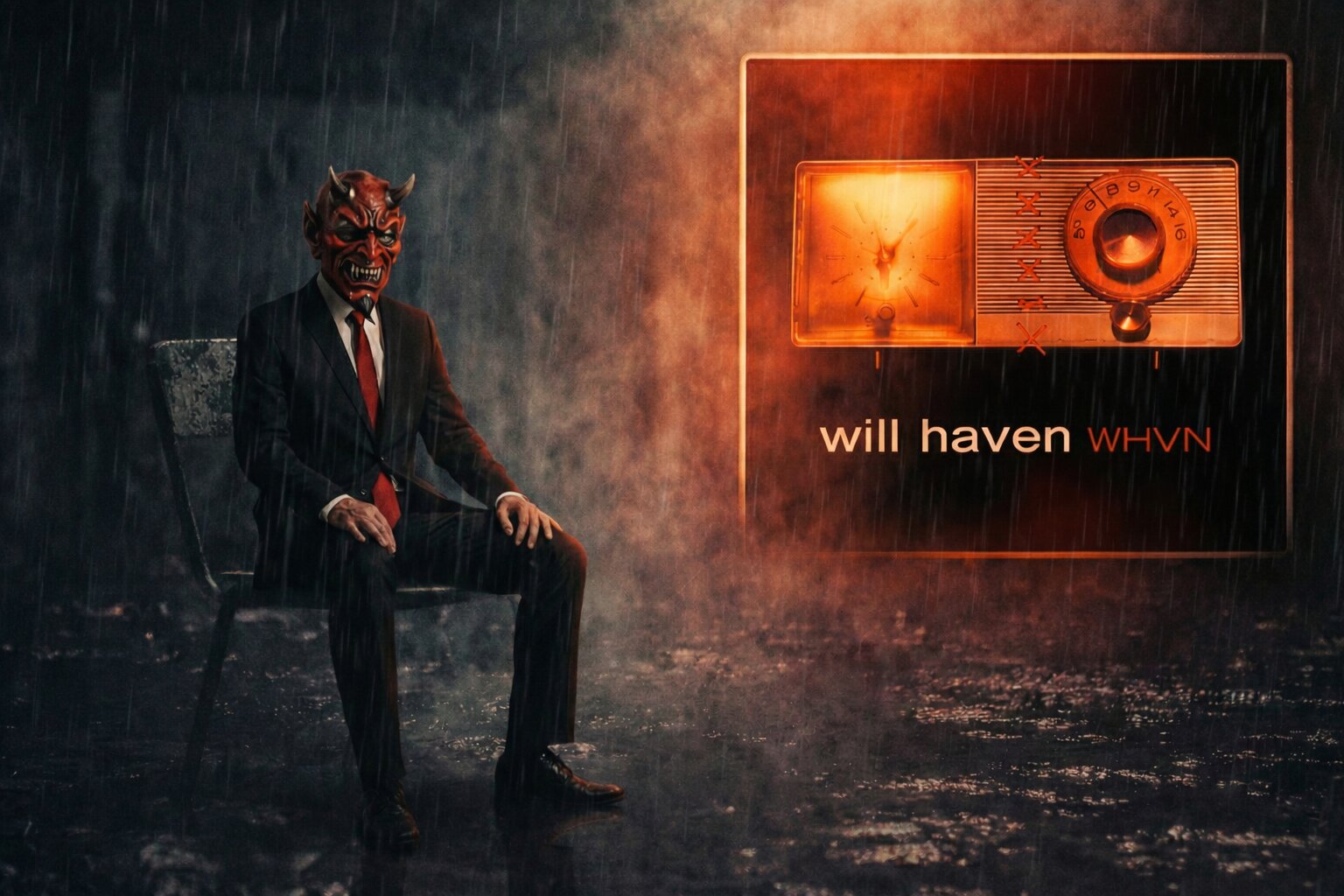
Yes, for fun I used AI to generate the above image
Will Haven WHVN: Where anger, despair, and noise collide beautifully.
Will Haven's WHVN crushes with abrasive noise, sludge-heavy riffs, and raw, claustrophobic emotion.
The Good
- Brutal, hypnotic heaviness that sticks with you.
- Emotionally raw and brutally honest lyrics.
- Bold experimentation with noise, dissonance, and song structure.
The Bad
- Can be exhausting; no easy listening here.
- Minimal melody — hooks are rare and subtle.
- Vocals are abrasive and polarizing.
Will Haven formed in Sacramento, California in the mid-90s, emerging from the same scorched-earth hardcore lineage that produced bands like Deftones, Far, and later (more distantly) ISIS. But where their peers often chased melody, atmosphere, or polish, Will Haven seemed actively suspicious of all three.
Their debut El Diablo (1997) was confrontational and raw — a blunt instrument of post-hardcore and noise metal, equal parts rage and abrasion. WHVN, their second album, released in 1999, feels like the moment where that anger turns inward, stretches out, and begins to rot.
Later albums would push further into sludge and post-metal territory (Carpe Diem, Voir Dire), but WHVN is the hinge: still violent, still rooted in hardcore, but already obsessed with weight, repetition, dissonance, and emotional claustrophobia.
If genre labels help at all, Will Haven live somewhere between noise metal and post-hardcore, with sludge heaviness and a distinctly Neurosis-esque sense of punishment-through-repetition — though without the widescreen mysticism. This is urban decay music. Concrete rooms. Flickering lights. No catharsis promised.
Review
The album as a whole: intimacy through abrasion.
WHVN doesn’t read like a concept album, but it feels unified in its emotional logic. These songs circle themes of:
- Rejection and self-loathing
- Emotional dependence and refusal
- Violence as fantasy, not solution
- Stagnation, paralysis, and modern alienation
- Faith, authority, and imposed meaning
What makes WHVN so compelling is that it never moralises. The narrator isn’t redeemed. Insight doesn’t lead to healing. Awareness just makes the walls feel closer.
Musically, the record leans hard on negative space, dissonant chord voicings, and riffs that feel less “written” than endured. Vocals are barked, shouted, sometimes almost conversational — always human, never mythic.
This is not post-metal’s slow transcendence. This is post-hardcore refusing to move on.
Fresno
An opener that immediately establishes WHVN’s emotional violence. “Fresno” frames intimacy as something cruel, transactional, and ultimately self-destructive.
Let’s go for a walk and paint the stars
In constellations of cruelty
Can you dig the moonlight?
There’s a brutal honesty here: closeness doesn’t heal, it exposes. The recurring image of rebuilding — “half the fun is rebuilding” — isn’t hopeful so much as compulsive. Destruction is familiar. Repair is just another cycle.
It’s a song about knowing you’re selfish, knowing you’re the problem, and being unable to stop anyway. A perfect thesis statement.
If She Could Speak
This is one of WHVN’s most confrontational emotional moments — a refusal to be turned into someone else’s saviour.
I’m not your Christ, I will not die for you.
The repetition here feels defensive, like a mantra shouted to convince both parties. There’s exhaustion in the delivery, a sense of being trapped in someone else’s narrative.
The line “I’ve made my court / My throne is full” suggests emotional boundaries being asserted too late — after damage has already been done. Power reclaimed, but hollow.
Jaworski
Pure pressure.
“Jaworski” is a straightforward rage track. The repeated insistence — “This… is… my… fuck you song” — gives the game away.
Violence wouldn’t be a cure… / But I bet it’d feel good
That tension — between knowing better and wanting worse — defines much of WHVN. This isn’t empowerment; it’s fantasised resistance when actual change feels impossible.
Slopez
One of the record’s quietest emotional knives.
“Innocence” here is framed as something demanded, not cherished — a performance enforced by power structures.
Everyone loves a good child / Behave and never swear / At the hand that feeds
It’s about conditional safety. About being protected only as long as you’re compliant. The repeated promise of being “safe until we find a new cause” is chilling — safety as a temporary lie.
End Summary
Stagnation made physical.
I’m frozen… the fear of falling behind
This track captures the album’s emotional paralysis better than any other. The imagery is bodily, humiliating, claustrophobic. Even observation becomes unbearable:
The cardboard faces stare straight through me
It’s not that no one understands — it’s worse than that. It’s the fear that no one even notices.
Genesis 11
The Tower of Babel reframed as indictment.
Unite. Build. Reaching.
Collective ambition turns mechanical, dehumanising. Faith and greed blur together. God’s punishment isn’t divine wrath so much as inevitable collapse.
The chant becomes its own critique: unity without reflection leads only to destruction.
Dallas Drake
One of the most prescient tracks on the record.
Locked in our chairs we fade
“Dallas Drake” skewers technological alienation long before it was fashionable. The machine doesn’t enslave us — we volunteer.
The desire here isn’t escape so much as touch:
I wish I could feel the warmth of another body
Connection reduced to fantasy, mediated through screens, endlessly deferred.
Death Do Us Part
A song about guilt that never loosens its grip.
Hate has been an anchor
This is emotional inheritance — pain passed down, unresolved, shaping every future decision. Redemption is imagined but never reached. Love becomes prayer, not action.
It’s one of WHVN’s most tragic tracks, precisely because it refuses resolution.
Muse
Creation as survival, art as self-definition.
I’m choosing the colours to my self portrait
After so much negation, this feels almost defiant. Not hopeful — but deliberate. Meaning doesn’t appear; it’s chosen, even if that choice is fragile and subjective.
Art here isn’t salvation. It’s agency.
Miguel Abburido
The album closes not with answers, but endurance.
Push on brother we are not weak
There’s no triumph here. Just persistence. Standing “in tall shapes and sizes” feels less like pride and more like acceptance — of imperfection, of damage, of continuing anyway.
Verdict
WHVN is not an easy record, and it doesn’t want to be. It doesn’t comfort, doesn’t resolve, doesn’t elevate suffering into something noble.
What it does offer is honesty without theatre — a document of emotional weight, internal conflict, and the refusal to pretend that awareness equals healing.
Like Oceanic, it rewards patience and return visits. But where ISIS reached outward — toward oceans, time, and transformation — Will Haven turn the camera inward and refuse to cut away.
Sometimes that’s the heavier move.